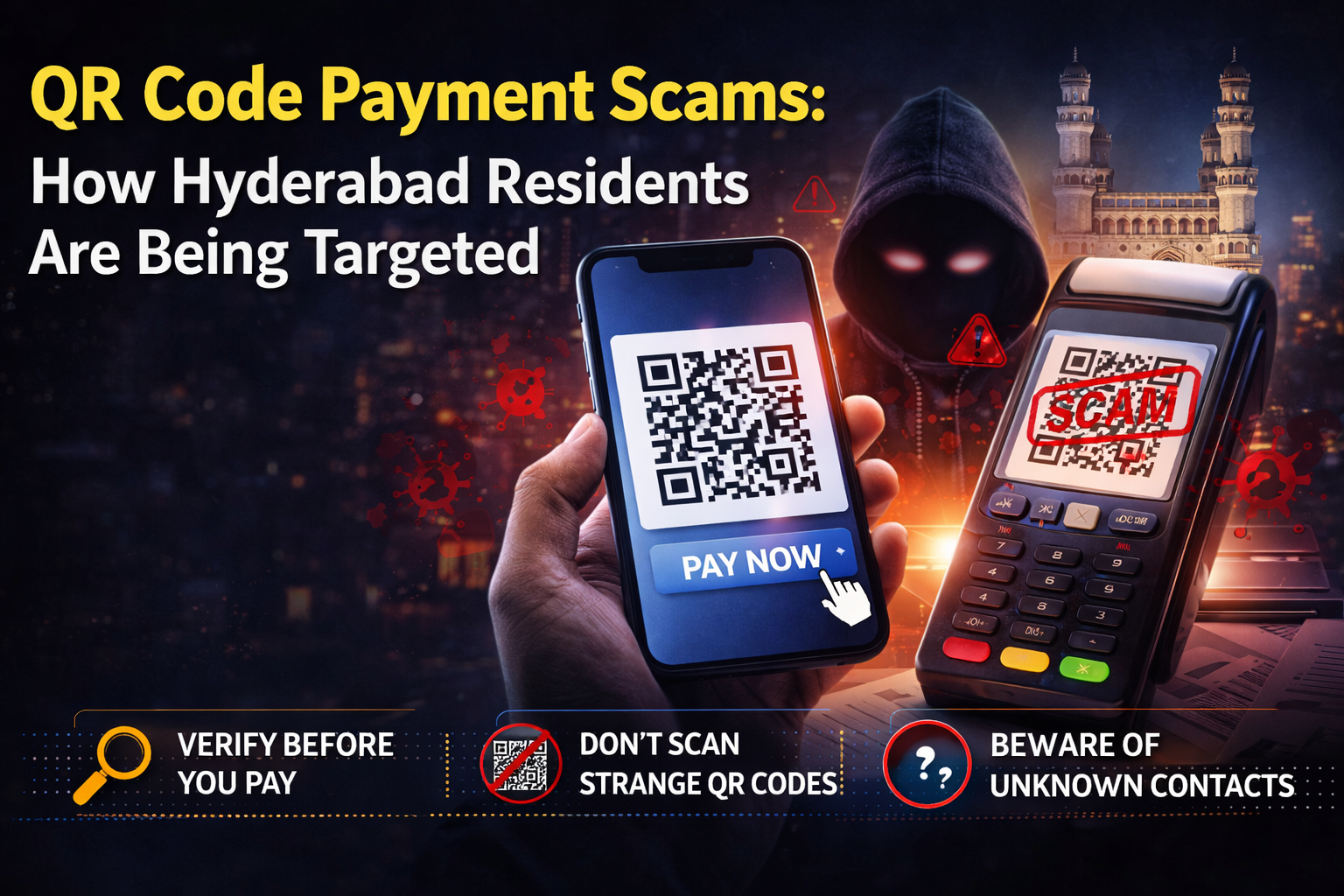
The rapid adoption of digital payments has transformed how people in Hyderabad conduct everyday transactions. From roadside vendors to large retail stores, QR codes have become a convenient way to transfer money instantly. However, cybercriminals have begun exploiting this technology to trick unsuspecting users into authorizing fraudulent payments.
Law enforcement agencies, including Cyberabad Police and Hyderabad City Police, have reported a noticeable increase in cases where victims lose money after scanning fraudulent QR codes sent by scammers.
How QR Code Scams Operate
In a typical QR code scam, criminals contact potential victims through messaging platforms or online marketplaces. They may pose as buyers, sellers, customer support representatives, or service providers.
For example, a fraudster posing as a buyer on an online marketplace might claim to be transferring money for a purchase. The scammer then sends a QR code and instructs the victim to scan it in order to “receive” the payment. In reality, scanning the code triggers a payment request, causing money to be transferred from the victim’s account to the fraudster.
Another variation involves criminals claiming to represent customer support teams for online platforms. Victims seeking refunds or assistance may be asked to scan QR codes as part of the “verification” process. Once scanned, funds are debited from their accounts.
These scams are particularly effective because many people assume QR codes are only used to receive payments. In reality, they can also initiate outgoing transactions.
Why These Scams Are Increasing
Experts believe QR code scams are increasing because digital payment platforms have become deeply integrated into everyday life. Many users rely on mobile payment applications without fully understanding how payment requests function.
Cybercriminals take advantage of this lack of awareness by creating scenarios that pressure victims into acting quickly. Victims are often told that a refund or payment cannot be processed unless the QR code is scanned immediately.
In addition, the widespread use of online marketplaces has created opportunities for scammers to interact with potential victims under the guise of legitimate transactions.
Warning Signs to Watch For
Recognizing suspicious behavior can help prevent financial losses.
One of the most common warning signs is a request to scan a QR code in order to receive money. Legitimate payments do not require the recipient to scan a QR code.
Another red flag is when someone insists that the transaction must be completed urgently. Fraudsters often create a sense of urgency to prevent victims from thinking carefully.
Users should also be cautious when dealing with unknown individuals online, particularly when transactions involve digital payments.
Preventive Measures
To reduce the risk of falling victim to QR code scams, experts recommend several safety measures.
Always verify the purpose of a QR code before scanning it. If someone claims that scanning a code will allow you to receive money, it is likely a scam.
Never share screenshots of payment applications or transaction confirmations with unknown individuals.
When conducting transactions through online marketplaces, use the platform’s official payment system rather than external payment requests.
Users should also regularly review transaction notifications from their banking or payment applications to identify unauthorized activity.
Reporting Fraud
If a person suspects that they have been targeted by a QR code scam, immediate action is essential.
Victims should contact their bank as soon as possible and report the unauthorized transaction. Early reporting may increase the chances of freezing the funds before they are withdrawn.
Cybercrime complaints can also be filed through the national cybercrime helpline or through official cybercrime reporting portals.
Investigators encourage victims to provide screenshots, phone numbers, and transaction details to help track down the criminals responsible.
Staying Informed
As digital payment systems continue to expand, public awareness remains a critical tool in preventing cyber fraud. Understanding how QR codes function and exercising caution during financial transactions can significantly reduce the risk of becoming a victim.
Hyderabad Crime Reporter continues to monitor emerging cybercrime trends and share safety guidance to help residents navigate the digital economy safely.
