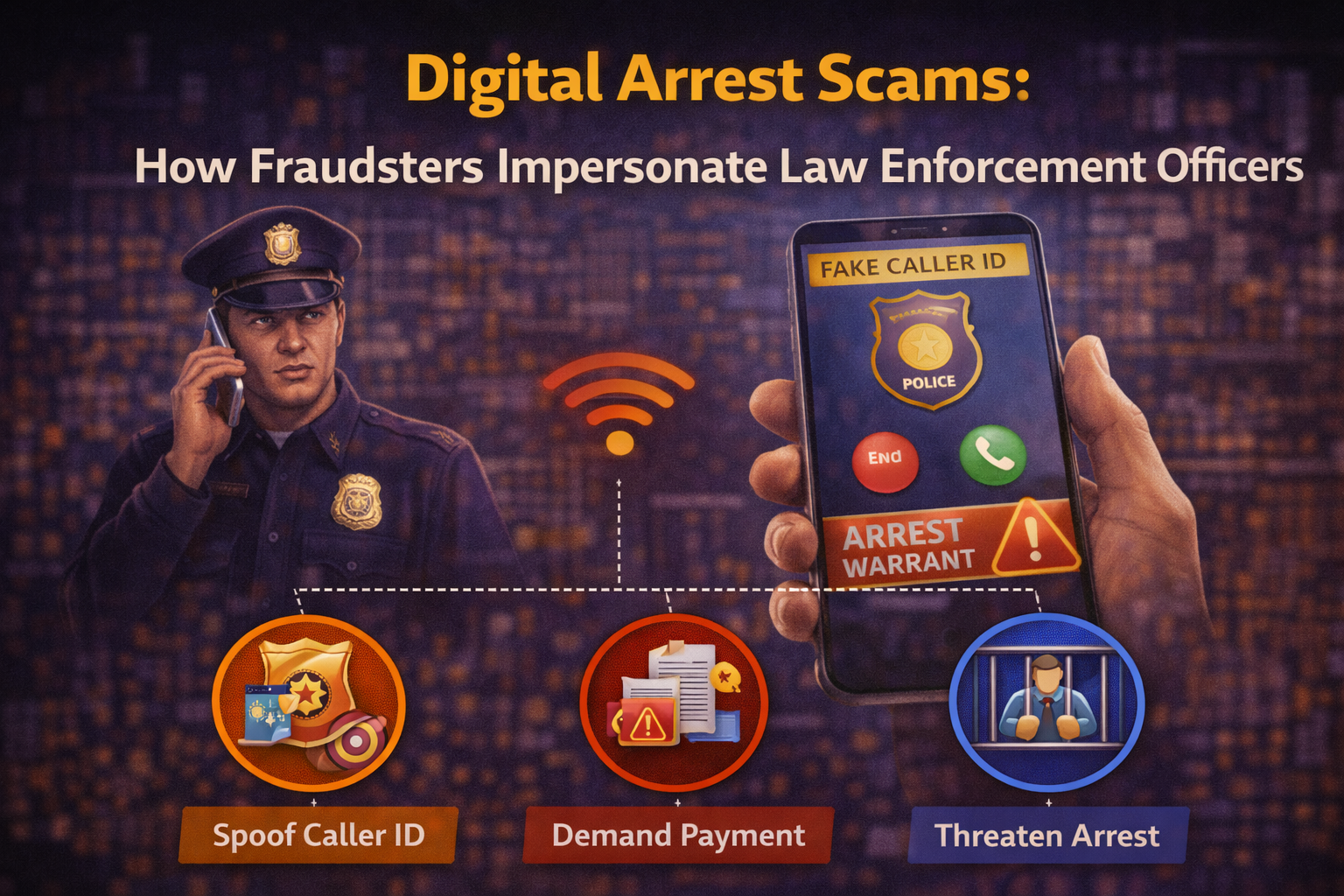
A new form of cyber fraud known as “digital arrest” scams has emerged in recent years, targeting individuals through intimidation and fear. In these scams, criminals impersonate law enforcement officers and accuse victims of involvement in serious crimes, demanding immediate payments to avoid arrest.
Investigators say several individuals across India, including residents in Hyderabad, have received threatening calls from fraudsters claiming to represent police agencies or investigative authorities.
Authorities associated with Cyberabad Police warn that criminals often exploit fear of legal action to pressure victims into transferring money quickly.
How Digital Arrest Scams Begin
The scam typically begins with a phone call from someone claiming to be a police officer, cybercrime investigator, or government official.
The caller informs the victim that their phone number, bank account, or identity has been linked to illegal activities such as money laundering, cybercrime, or drug trafficking.
In some cases, the fraudster claims that a package containing illegal materials has been intercepted in the victim’s name.
The victim is then told that a formal investigation is underway and that they may be arrested unless they cooperate immediately.
To appear legitimate, the scammers may conduct video calls showing individuals dressed in uniforms or sitting in offices designed to resemble police stations.
How Fraudsters Demand Money
Once the victim is frightened, the fraudster offers a way to “resolve” the situation.
Victims are told they must transfer money for legal verification, investigation fees, or account monitoring.
The scammers often instruct victims not to inform family members or local authorities, claiming that the investigation is confidential.
Payments are usually requested through digital wallets, bank transfers, or cryptocurrency transactions.
After receiving the money, the criminals disappear.
Why These Scams Are Effective
Digital arrest scams rely heavily on fear and psychological pressure.
Many victims comply with the fraudsters’ demands because they believe they are speaking to genuine law enforcement officials.
The scammers often use official-sounding language and may even provide fake identification numbers or legal documents to appear credible.
The urgency of the situation also prevents victims from verifying the authenticity of the claims.
Warning Signs of Digital Arrest Fraud
Law enforcement agencies do not demand payments over phone calls to resolve criminal investigations.
Another warning sign is when callers insist that the victim must remain on the phone continuously and avoid contacting anyone else.
Requests for immediate payment through digital transfers are also a strong indication of fraud.
Victims should also be cautious if the caller refuses to allow verification through official police channels.
Protecting Yourself from Digital Arrest Scams
Individuals who receive threatening calls from people claiming to be police officers should remain calm and avoid sharing personal or financial information.
It is advisable to disconnect the call and contact local law enforcement authorities directly through official channels.
Consulting family members or trusted individuals before taking any action can also help prevent panic-driven decisions.
Reporting Digital Arrest Fraud
Victims of such scams should immediately report the incident to cybercrime authorities and provide details such as phone numbers, call recordings, and payment records.
Authorities associated with Hyderabad City Police encourage citizens to report these cases so investigators can track and dismantle fraud networks.
Raising Awareness
Digital arrest scams demonstrate how criminals are increasingly using psychological manipulation rather than technical hacking methods to commit fraud.
Hyderabad Crime Reporter will continue monitoring cybercrime developments and publishing public awareness articles to help readers recognize and avoid such scams.
