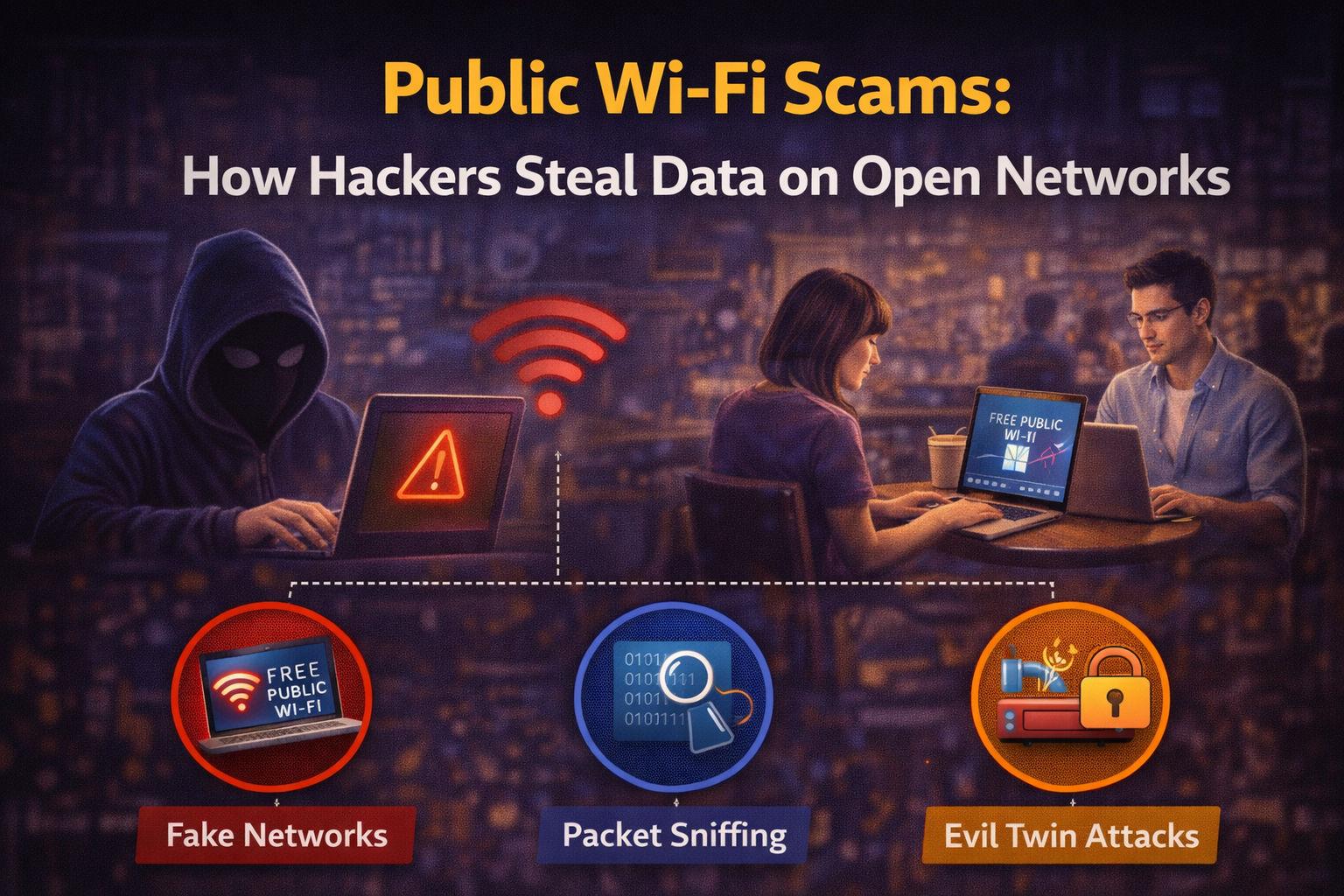
Free public Wi-Fi networks have become common in airports, cafes, hotels, shopping malls, and railway stations. These networks allow users to access the internet without using mobile data. However, cybersecurity experts warn that public Wi-Fi can also expose users to serious risks if proper precautions are not taken.
Cybercriminals often exploit unsecured networks to intercept sensitive information such as login credentials, banking details, and personal data. Several users across major cities, including Hyderabad, have reported cases where hackers accessed their accounts after they connected to public networks.
Authorities associated with Cyberabad Police advise individuals to exercise caution when using public internet connections.
How Public Wi-Fi Scams Work
One common technique used by hackers is known as a “rogue hotspot.” In this method, criminals create a Wi-Fi network with a name similar to a legitimate network offered by a café, airport, or hotel.
When users connect to the fake network, all their internet traffic passes through the hacker’s device.
This allows the criminal to monitor browsing activity and capture login credentials entered on websites.
Another technique involves “man-in-the-middle” attacks, where hackers intercept communications between the user’s device and the website being accessed.
Why Public Wi-Fi Attacks Are Effective
Public Wi-Fi networks are often unsecured or poorly protected. Many users connect automatically without verifying whether the network is legitimate.
Because public networks are used for routine activities such as checking emails or social media, users may not realize that their data is being intercepted.
Hackers can exploit this lack of awareness to steal information without the victim noticing immediately.
Warning Signs of Unsafe Networks
Users should be cautious if a public network does not require any password or verification.
Networks with unfamiliar names or duplicate names that resemble official hotspots may indicate rogue access points.
Another warning sign is when websites repeatedly ask users to re-enter login credentials.
Protecting Yourself on Public Wi-Fi
Users should avoid accessing banking services or making financial transactions while connected to public Wi-Fi.
Using a virtual private network (VPN) can help encrypt internet traffic and protect sensitive information.
It is also advisable to disable automatic Wi-Fi connections on mobile devices.
Reporting Cyber Incidents
Victims who suspect their accounts were compromised after using public Wi-Fi should immediately change passwords and notify their bank.
Authorities associated with Hyderabad City Police encourage individuals to report cyber incidents so investigators can track hacking activities.
Staying Secure Online
Public Wi-Fi networks offer convenience, but users must remain cautious when sharing sensitive information online.
Hyderabad Crime Reporter will continue highlighting cybersecurity risks and providing guidance to help readers protect their digital privacy.
