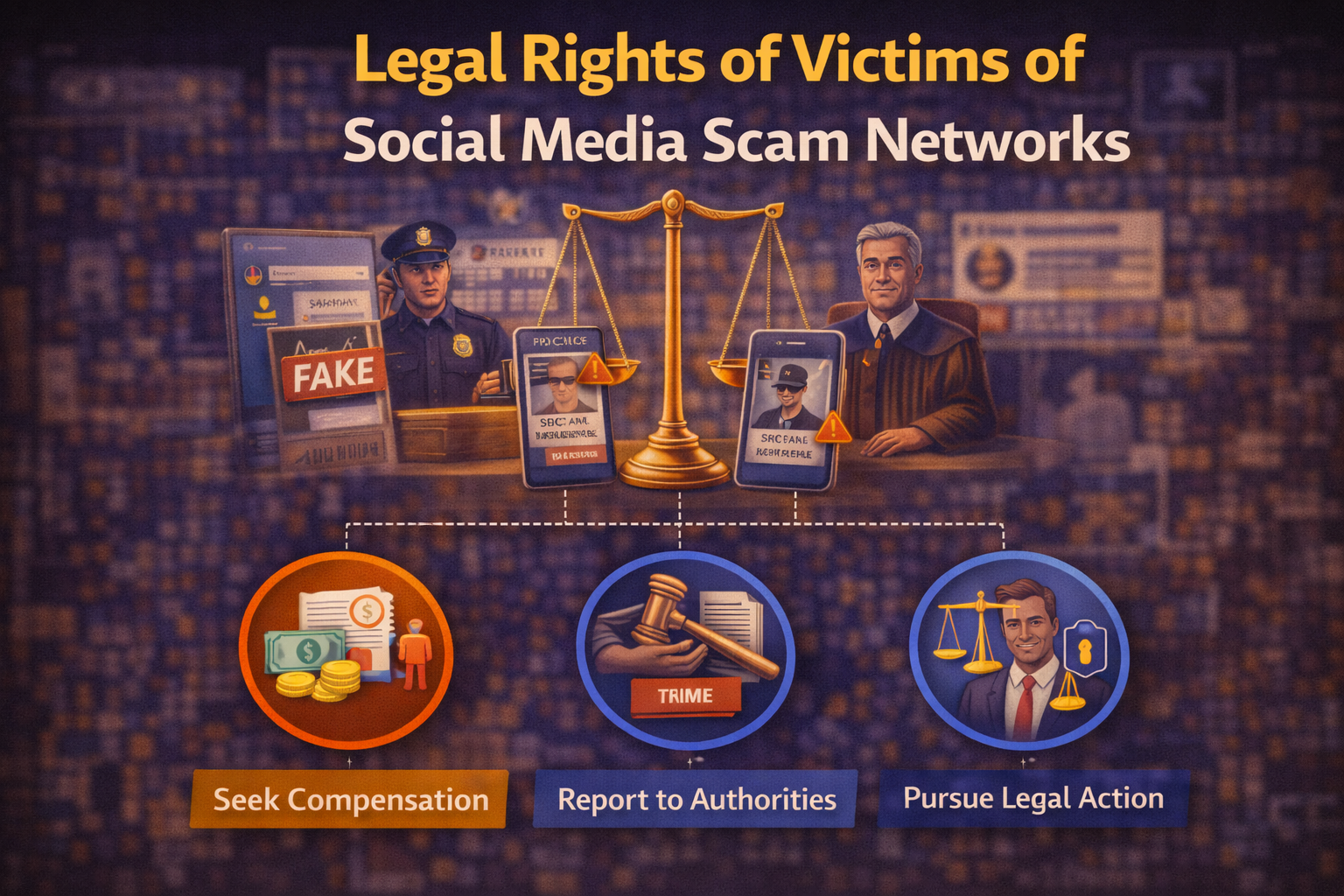
Social media platforms have become essential tools for communication, business promotion, and information sharing. However, criminals have also begun using these platforms to operate large-scale scam networks. These networks often involve fake profiles, misleading advertisements, and fraudulent financial schemes targeting unsuspecting users.
Victims of social media scams may suffer financial losses, identity misuse, or reputational damage after interacting with fraudulent accounts. Understanding the legal rights available to victims can help individuals take action and report such crimes effectively.
Understanding Social Media Scam Networks
Social media scam networks typically involve multiple accounts working together to create the appearance of legitimacy. Fraudsters may create pages promoting investment opportunities, online shopping deals, or charitable campaigns.
Victims may be encouraged to communicate privately with the account operator, who may request payment for products, services, or investment opportunities.
These scams often rely on fake testimonials and fabricated success stories to gain the trust of potential victims.
Once money is transferred, the fraudsters may block the victim or delete the account entirely.
Reporting Social Media Fraud
Victims of social media scams have the right to report the incident both to the platform hosting the account and to law enforcement authorities.
Authorities associated with Hyderabad City Police encourage victims to report fraudulent profiles and provide details about the communication that occurred.
Providing screenshots of messages, profile links, and payment records can assist investigators in analyzing the scam.
Early reporting can also help social media platforms remove fraudulent accounts before they deceive additional users.
Preserving Digital Evidence
Victims should preserve all evidence related to the scam before reporting the incident. Screenshots of profile pages, posts, and private messages may serve as important evidence during investigations.
Records of payment confirmations or transaction IDs can also help investigators trace financial transfers linked to the fraud.
Maintaining proper documentation strengthens complaints filed with authorities.
Legal Consequences for Fraudsters
Individuals operating social media scam networks may face criminal charges under laws related to fraud, impersonation, and cybercrime.
Law enforcement authorities may analyze digital records, financial transactions, and communication channels used by the scammers.
Authorities associated with Cyberabad Police emphasize that public reporting plays a critical role in identifying organized scam networks.
Protecting Social Media Users
Users can reduce the risk of social media fraud by verifying profiles before engaging in financial transactions. Avoiding unknown investment offers, suspicious advertisements, or urgent payment requests can help prevent financial losses.
Adjusting privacy settings and limiting personal information shared online can also reduce the risk of identity misuse.
Importance of Digital Awareness
Social media scams rely on deception and trust manipulation. Increasing awareness about these tactics can help individuals recognize fraudulent activity before becoming victims.
Hyderabad Crime Reporter will continue publishing cyber safety awareness articles to help readers understand their rights and respond effectively to social media scam networks.
