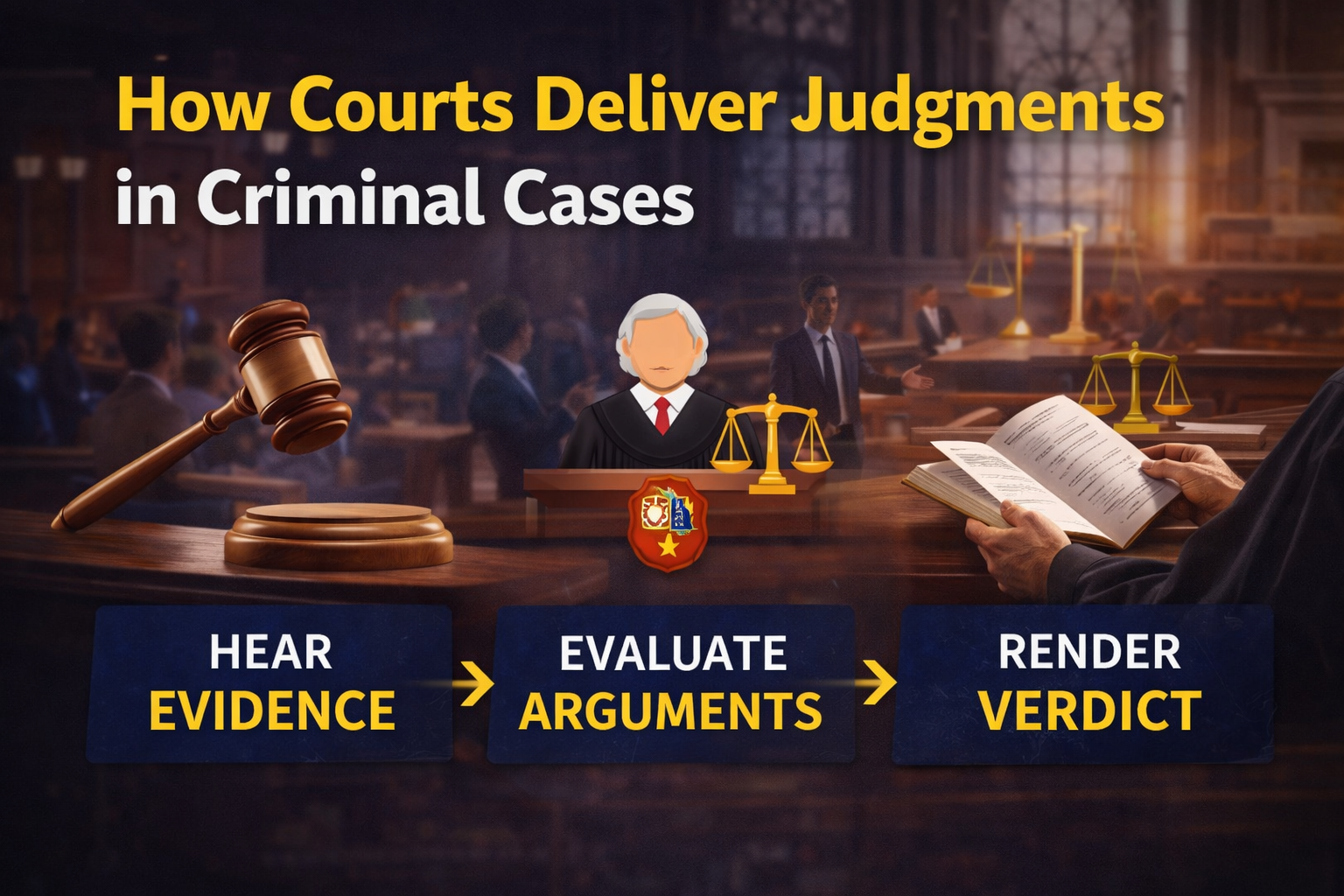
The delivery of judgment is the final stage of a criminal trial. After examining all evidence, hearing witness testimony, and considering legal arguments from both sides, the court reaches a decision regarding the guilt or innocence of the accused.
The judgment represents the court’s official conclusion based on the facts of the case and the applicable law. Understanding how courts deliver judgments helps citizens appreciate the careful process that leads to legal decisions.
Meaning of Judgment in Criminal Law
A judgment is the formal decision delivered by a court at the end of a trial. It explains whether the accused person is guilty or not guilty of the charges presented during the case.
The judgment also includes the reasoning behind the court’s decision and the legal principles applied during the evaluation of the evidence.
Authorities associated with Hyderabad City Police explain that judgments must be based on evidence presented during the trial and the provisions of criminal law.
Review of Evidence Before Judgment
Before delivering the judgment, the judge carefully reviews all evidence presented during the trial.
This includes witness testimony, documents, forensic reports, and other materials introduced during court proceedings.
The judge examines whether the prosecution has proven the allegations beyond reasonable doubt.
Authorities associated with Cyberabad Police emphasize that judges must evaluate evidence impartially to ensure fairness.
Possible Outcomes of a Criminal Trial
After reviewing the case, the court may reach different conclusions depending on the evidence available.
If the court finds that the evidence proves the accused person’s guilt beyond reasonable doubt, the accused may be convicted.
If the evidence is insufficient or unreliable, the accused may be acquitted.
Acquittal means that the court does not find sufficient proof that the accused committed the crime.
Sentencing After Conviction
If the accused is found guilty, the court proceeds to the sentencing stage.
During sentencing, the judge determines the appropriate punishment based on the severity of the offence and the circumstances of the case.
Punishments may include imprisonment, fines, or other penalties defined under the law.
The court may also consider mitigating factors when determining the sentence.
Importance of Written Judgments
Judgments are typically written documents that explain the court’s reasoning in detail.
These documents become part of official legal records and may be reviewed during appeals or future legal proceedings.
Written judgments help ensure transparency and accountability within the judicial system.
Right to Appeal
After a judgment is delivered, the accused or the prosecution may have the right to appeal the decision in a higher court.
Appeals allow higher courts to review whether the law was correctly applied during the trial.
This process helps ensure that justice is maintained and that errors can be corrected.
Promoting Legal Awareness
Understanding how courts deliver judgments helps citizens appreciate the careful and systematic approach used in criminal trials.
Public awareness about judicial procedures strengthens trust in the legal system.
Hyderabad Crime Reporter will continue publishing legal awareness articles to help readers understand how criminal cases are decided in courts.
