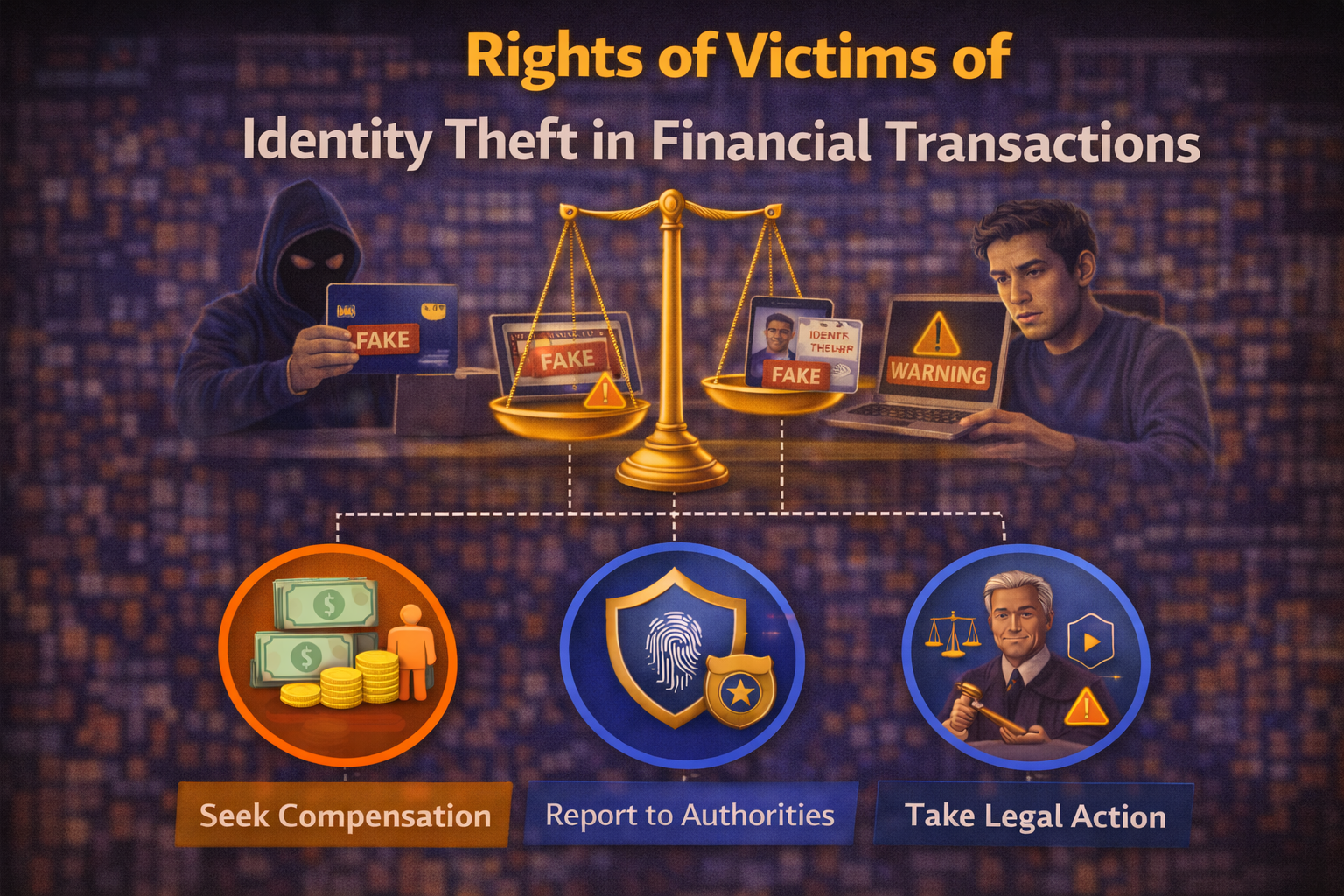
Identity theft has become a growing concern in the digital economy where financial transactions are conducted through online banking, payment apps, and e-commerce platforms. Criminals may steal personal information such as identification numbers, banking details, or login credentials to conduct unauthorized financial transactions.
Victims often discover identity theft only after noticing unfamiliar charges, unauthorized transfers, or new financial accounts opened in their name. Such incidents can lead to financial losses and damage to a victim’s financial reputation.
Understanding the legal rights available to victims of identity theft can help individuals respond quickly and protect their financial security.
Understanding Identity Theft in Financial Systems
Identity theft occurs when criminals obtain personal information belonging to another person and use it to conduct financial activities without authorization. This may include opening bank accounts, applying for loans, or making purchases using stolen identity details.
Fraudsters may obtain personal information through phishing emails, data breaches, malware attacks, or fraudulent phone calls.
Once the information is obtained, criminals may conduct multiple transactions before the victim becomes aware of the fraud.
Reporting Identity Theft
Victims of identity theft have the right to report the incident to law enforcement authorities and financial institutions.
Authorities associated with Hyderabad City Police encourage victims to report unauthorized financial activities immediately after they are detected.
Providing details such as transaction records, account information, and suspicious communication can help investigators analyze the incident.
Prompt reporting can also help financial institutions block unauthorized transactions and secure affected accounts.
Preserving Financial Evidence
Maintaining records of financial transactions is crucial when addressing identity theft cases. Victims should retain bank statements, transaction alerts, and communication with financial institutions regarding unauthorized activity.
Screenshots of suspicious emails or messages requesting personal information may also assist investigators.
Keeping organized documentation strengthens complaints and supports investigations.
Assistance from Financial Institutions
Banks and financial institutions often assist victims by reviewing suspicious transactions and securing compromised accounts.
Once notified, banks may block affected cards, change account credentials, and monitor accounts for further unauthorized activity.
Financial institutions may also cooperate with law enforcement agencies during investigations.
Legal Consequences for Offenders
Individuals responsible for identity theft may face criminal charges under laws related to financial fraud and cybercrime.
Investigators may analyze digital records, financial transactions, and communication channels used by offenders.
Authorities associated with Cyberabad Police emphasize that reporting identity theft helps authorities track organized cybercrime networks targeting financial systems.
Importance of Financial Awareness
Protecting personal information is one of the most effective ways to prevent identity theft. Individuals should avoid sharing confidential financial details with unknown sources and regularly review their account activity.
Hyderabad Crime Reporter will continue publishing financial awareness articles to help readers understand their rights and protect themselves from identity theft.
