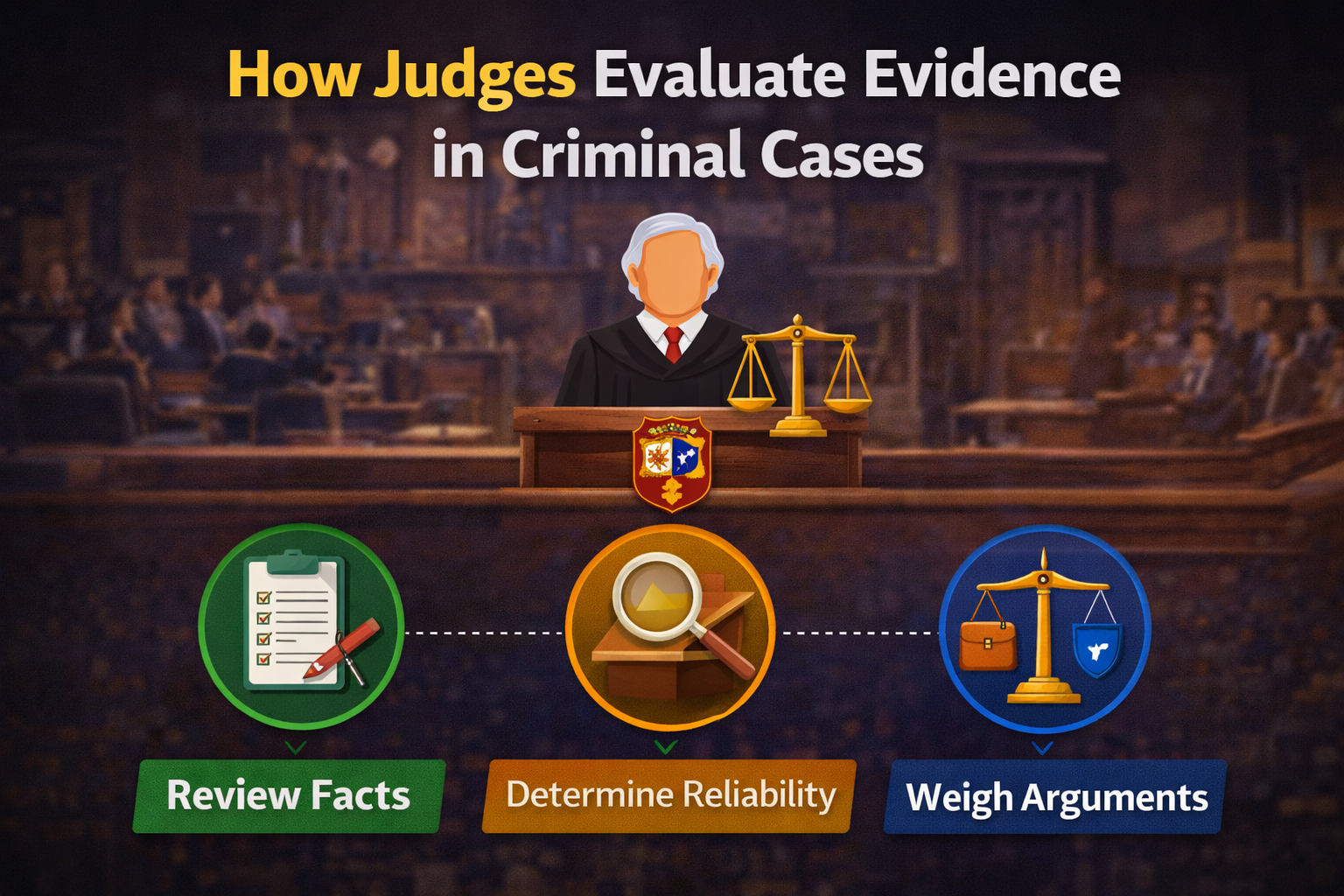
In criminal trials, judges are responsible for carefully examining the evidence presented by both the prosecution and the defense. Their task is to determine whether the accused person is guilty or innocent based on the facts and legal principles applicable to the case.
Understanding how judges evaluate evidence helps citizens appreciate the careful process involved in reaching fair and balanced decisions in criminal cases.
Role of the Judge in Criminal Trials
The judge acts as an impartial authority responsible for ensuring that the trial is conducted fairly. Judges oversee court proceedings, examine the evidence presented, and ensure that legal rules are followed.
Authorities associated with Hyderabad City Police explain that judges play a critical role in maintaining fairness during criminal trials.
They ensure that both the prosecution and defense have equal opportunities to present their arguments.
Types of Evidence Considered
Judges consider several types of evidence when evaluating a case. These include witness testimony, documents, physical evidence, and forensic reports.
Each type of evidence provides different information that may help establish the facts of the case.
For example, witness testimony may describe what occurred during the incident, while forensic evidence may confirm scientific details related to the crime.
Authorities associated with Cyberabad Police emphasize that judges must carefully examine the reliability and relevance of each piece of evidence.
Evaluating Witness Credibility
One important aspect of evaluating evidence involves assessing the credibility of witnesses.
Judges observe how witnesses respond to questions during testimony and cross-examination.
If a witness provides inconsistent statements or appears uncertain about key details, the judge may consider those factors when evaluating the testimony.
Reliable and consistent testimony is often given greater weight in court.
Importance of Corroborating Evidence
Judges often look for corroborating evidence to support witness statements.
For example, if a witness claims that the accused was present at a particular location, additional evidence such as surveillance footage or forensic findings may help confirm that statement.
Corroboration strengthens the reliability of evidence presented during the trial.
Standard of Proof
In criminal cases, the prosecution must prove the accused person’s guilt beyond reasonable doubt.
This means the evidence presented must be strong enough to convince the court that the accused committed the crime.
If reasonable doubt exists, the accused may be acquitted.
This standard protects individuals from wrongful conviction.
Delivering the Final Judgment
After reviewing all evidence and hearing arguments from both sides, the judge delivers the final judgment.
The decision is based on the law and the facts established during the trial.
The judgment explains the reasoning behind the court’s decision and determines whether the accused is guilty or not guilty.
Promoting Legal Awareness
Understanding how judges evaluate evidence helps citizens appreciate the complexity of criminal trials and the importance of fairness in legal proceedings.
Public awareness about judicial processes strengthens confidence in the justice system.
Hyderabad Crime Reporter will continue publishing legal awareness articles to help readers understand how courts examine evidence and deliver justice.
