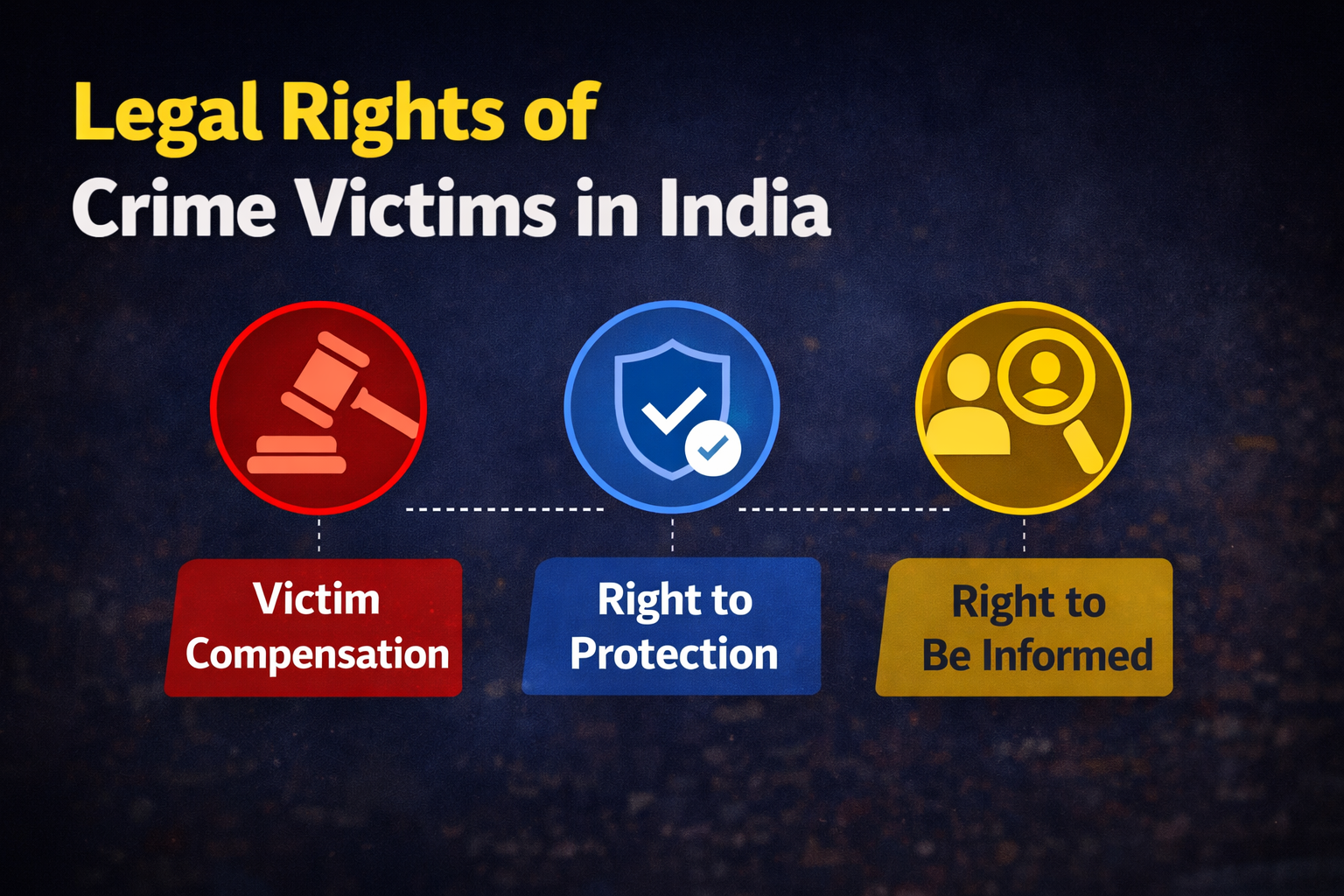
Crime victims often face emotional, financial, and legal challenges after experiencing a criminal incident. While the justice system traditionally focuses on investigating and prosecuting offenders, Indian law also recognizes the importance of protecting the rights of victims. Over the past decade, several legal reforms have strengthened victim rights, ensuring that those affected by crime receive fair treatment, support, and access to justice.
Understanding these rights can help victims navigate the legal system more confidently and seek the assistance they deserve.
The Right to File a Complaint
The first and most fundamental right of a crime victim is the ability to report the incident to law enforcement authorities. Victims can file a First Information Report (FIR) at the nearest police station describing the crime that has occurred.
Police officers are legally obligated to register the complaint when the information relates to a cognizable offense. Refusal to register an FIR can be challenged through higher authorities or by approaching a magistrate court.
Authorities associated with Hyderabad City Police encourage victims to report crimes promptly so that investigations can begin immediately.
The Right to Fair Investigation
Once a complaint has been registered, victims have the right to a fair and impartial investigation conducted by law enforcement authorities. Police are required to collect evidence, interview witnesses, and gather relevant information to determine whether a crime has occurred.
Victims may be asked to provide statements and additional details that could assist investigators. It is important for victims to cooperate with authorities to ensure the investigation progresses effectively.
The Right to Be Informed
Victims have the right to be informed about important developments in their case. This includes updates regarding arrests, court proceedings, and bail decisions related to the accused.
Courts and investigative agencies increasingly recognize the importance of keeping victims informed throughout the legal process.
The Right to Legal Representation
Victims may seek legal representation through private lawyers or government-supported legal aid services. Legal representation helps victims understand court procedures, prepare statements, and ensure their rights are protected during trials.
Free legal assistance is available for individuals who cannot afford private legal representation through government legal aid programs.
The Right to Compensation
Indian law recognizes that victims may suffer financial losses as a result of crime. To address this, several states operate victim compensation schemes designed to provide financial assistance.
Compensation may cover medical expenses, rehabilitation costs, or other losses resulting from the crime.
Courts may also order compensation from convicted offenders in certain cases.
The Right to Protection
Victims involved in serious criminal cases may face threats or intimidation. To address this concern, witness protection mechanisms have been introduced to safeguard victims and witnesses participating in criminal trials.
Protection measures may include confidentiality of identity, police protection, or relocation in extreme cases.
The Importance of Victim Awareness
Despite these legal protections, many victims remain unaware of the rights available to them. Lack of awareness can discourage victims from pursuing justice or accessing available support services.
Authorities associated with Cyberabad Police emphasize that citizens should seek legal assistance if they become victims of crime and should not hesitate to report incidents to law enforcement.
Strengthening Victim Support Systems
In recent years, the Indian legal system has taken steps to strengthen victim support through compensation schemes, legal aid services, and improved investigation procedures.
However, continued awareness and community support remain essential to ensure victims receive the protection and assistance they deserve.
Hyderabad Crime Reporter will continue publishing legal awareness articles to help readers understand their rights and navigate the justice system more effectively.
